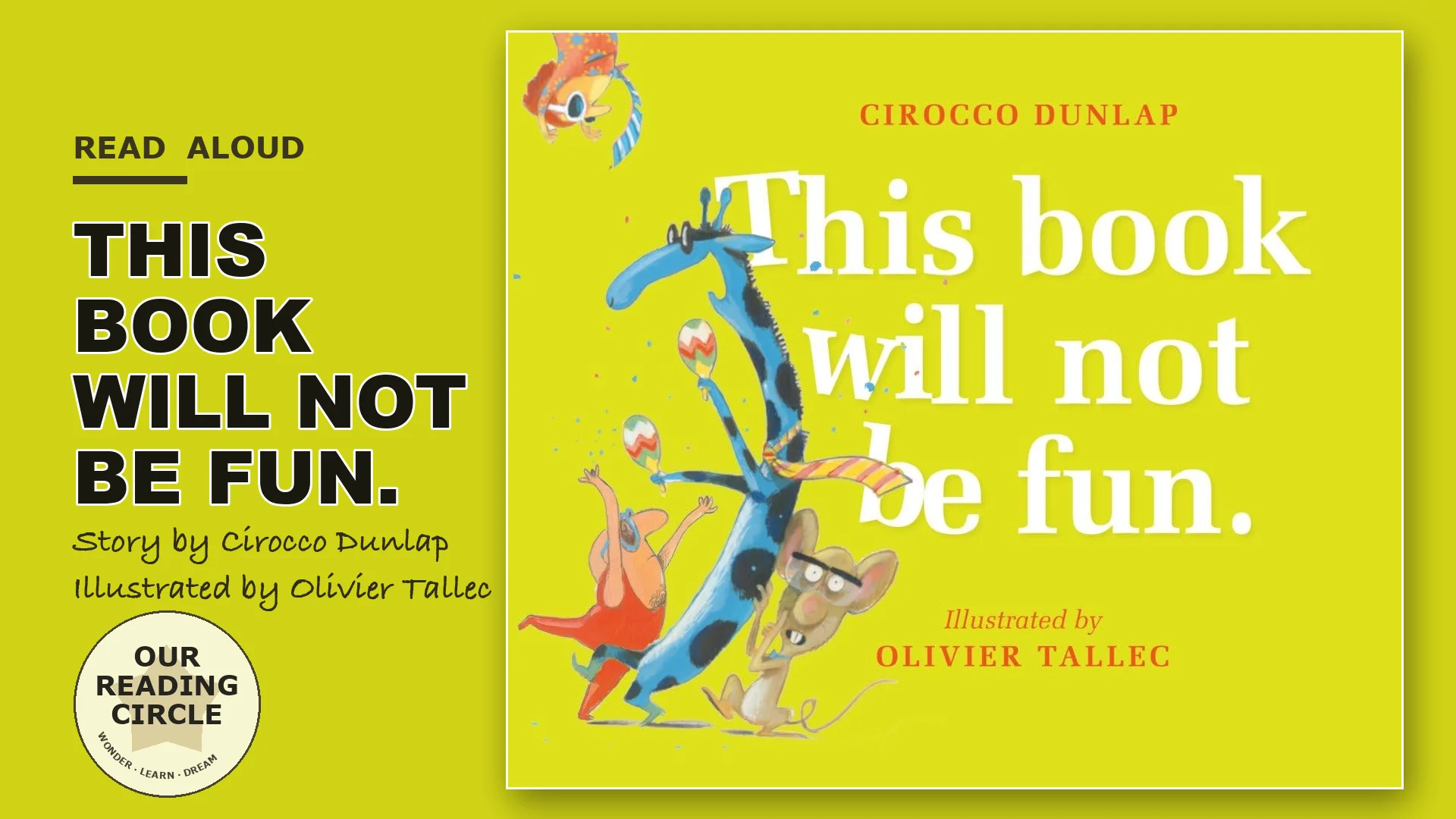
This Book Will Not Be Fun
About This Story
Yes, and the caveat is small: adults who tire of books about books can skip it. What your child gets is a mouse in a bow tie and round glasses who walks onto an empty white page carrying a book and a potted plant, sits down to read, and tells you plainly that nothing interesting is about to happen.
Then you get to watch that certainty work. The mouse states a position and defends it page after page, and the pages keep disagreeing with him. Cirocco Dunlap wrote the part, and Olivier Tallec drew a small scholar with an air tight case and a world that will not stay quiet. That tension is the read, and children lean into it while the grown up stays quiet.
Her debut picture book, and a funny one. Most of the humor hides in the drawings, not the words, and children who cannot follow every sentence still catch the punchline and want the next page. Read it twice.
As an Amazon Associate, we earn from qualifying purchases.
What Happens in the Story
Start with the setup, because the book never lets it go. A first person mouse appears in white space with a book and a potted plant, reads on the right hand page with his back to the gutter, and announces that this book will not be fun. The jacket flap has already promised as much, and he means every word.
The first shift is between him and you. He does not ask. He instructs. When a Word Eating Flying Whale drifts in from the left, the audience is told to ignore the disturbance, and the mouse keeps reading as if nothing large had entered the room. He is narrating, and narration is the job he does best.
The second shift runs between him and the whale, and his plan collapses before the sentence is done. The whale eats words. The mouse insists that nothing is happening and gets further from the sentence he meant to say. Tallec draws the whale long enough and blue enough that ignoring it becomes a choice the reader is being asked to make.
Then the trail. A Glow in the Dark Kung Fu Worm leaves tiny footprints across pages that have gone charcoal, and following them proves irresistible, the mouse says, if only to keep everything calm. The third shift is his own. From the one in charge of a quiet reading, he becomes the one following somebody else’s path across a dark page, his rule bent and his voice starting to lose its footing. He asks you to come along. You will not want to say no.
Then comes a party page, and his careful certainty does not survive it.
Why It Works for Family Read Aloud
Dialogic reading means giving your child a question to answer while you read aloud. Reading Rockets describes it as the point where a book stops being something you perform at and starts being something you do together. That shift gets handed to you early. The mouse does not ask for help. He gives orders, and the moment he tells you to ignore the whale, you are already playing, even if you had no plan for it.
So try one thing tonight. Read the mouse’s instructions in the flattest voice you own and do not explain them. A child told to ignore a whale has to make the call, and that deciding is the game. Let the pause after the instruction sit longer than feels comfortable. The reading happens inside that pause.
A second reason sits far away from the joke. The pictures carry much of it. Tallec’s whale crosses a spread while the text stays calm, so a child still holding on to sentences can follow the artwork and still laugh at the right moment. When the words have not landed yet, a reader can still track the whale sailing over the page. That matters most in a book whose words are a mouse’s pedantic monologue, where the drawings have to do the explaining.
Then there is the music. When the party starts, the mouse describes it as having plenty of notes and a fine, sturdy rhythm, and the restraint is the joke. Kirkus asked whether young listeners catch humor like that, and some of them will need another reading. Here is the honest answer: the first reading is mostly for you. The second one belongs to them.
Who This Book Is For
Expect the pages to go dark. That is the story, not a problem, so say it once before the charcoal spreads and your listener will take them as a surprise instead of a worry. Children who like a narrator with an opinion do best here. One who worries about strange creatures may want a calmer book that night. The whale is enormous and the dark pages come without warning, so check in first.
It suits a household with a reader who likes being talked to. The mouse addresses you directly, so an older child can play the grown up and a younger one can play the whale, and nobody in the room has to explain the joke.
For more books with this kind of voice, Baa Baa Smart Sheep gives your child a smug trickster to watch and lets the lie land. All Right Already turns a stubborn afternoon into the whole story. A Perfectly Messed-Up Story lets a story come apart on purpose.
Did this read aloud help you find your next bedtime book?

Your support helps us keep adding new read aloud reviews.
Frequently Asked Questions
What is This Book Will Not Be Fun about?
A mouse in a bow tie reads a book and announces it will not be fun. While he holds that opinion, a flying whale eats the words off the page and a glowing worm leaves footprints across the dark spreads.
Who wrote This Book Will Not Be Fun?
Cirocco Dunlap wrote it and Olivier Tallec drew it. It is Dunlap’s first picture book, and Publishers Weekly gave it a starred review, singling out the voice that carries the whole story.
What age is This Book Will Not Be Fun for?
It suits Preschool to Grade 2 listeners. The pictures carry much of the joke, so a younger child can join in even before the words land, and an older sibling can play the mouse.
Is This Book Will Not Be Fun good for a read aloud?
Yes. The mouse talks straight to the reader, which gives your child a part to play instead of a story to sit through. Read the instructions flat and leave room after them.
Is there a sequel to This Book Will Not Be Fun?
There is no sequel, but there is plenty more from the same team. Dunlap wrote Crunch, The Shy Dinosaur, illustrated by Greg Pizzoli, and Tallec has illustrated more than sixty books for children.
Where can I find more silly read alouds?
Browse our shelf of fun and imaginative tales for more read alouds built on jokes, reversals, and characters with something to prove. Each listing says what to expect before you start.


